Tag: Registry

  • How to Disable Fast Startup in Windows Using PowerShell

    How to Disable Fast Startup in Windows Using PowerShell

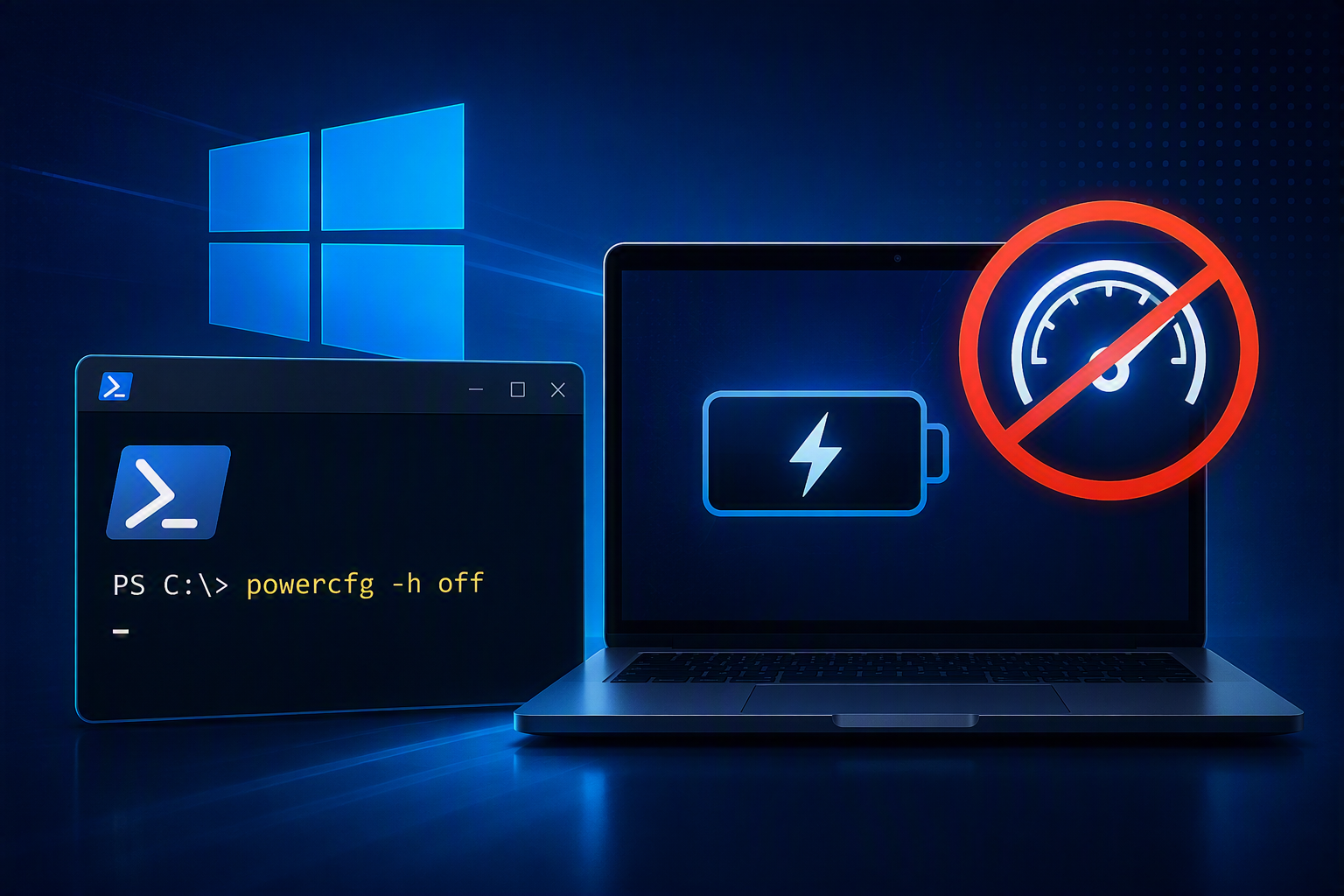
    Fast Startup is a Windows feature designed to reduce boot times by partially hibernating the operating system when shutting down. While this can improve startup performance, it may also cause unexpected issues with updates, device initialization, remote management, and troubleshooting activities.

    For IT administrators and power users, disabling Fast Startup is often recommended to ensure a clean shutdown and startup cycle.

    What Is Fast Startup?

    Introduced in Windows 8 and available in Windows 10 and Windows 11, Fast Startup combines elements of a traditional shutdown and hibernation.

    Instead of fully closing the Windows kernel during shutdown, the operating system stores the kernel session in the hibernation file (hiberfil.sys). During the next startup, Windows reloads this file instead of performing a complete boot process.

    Benefits

    • Faster boot times
    • Reduced startup delays on traditional hard drives
    • Improved user experience for home users

    Potential Issues

    In enterprise environments, Fast Startup can sometimes create problems such as:

    • Windows Updates not applying correctly
    • Wake-on-LAN inconsistencies
    • BitLocker recovery prompts
    • Dual-boot operating system issues
    • Network adapter initialization problems
    • Inaccurate uptime reporting
    • Troubleshooting complications when a full restart is required

    Disable Fast Startup Using PowerShell

    The Fast Startup setting is controlled through the following registry value:

    HKLM\SYSTEM\CurrentControlSet\Control\Session Manager\Power\HiberbootEnabled

    Value meanings:

    ValueDescription
    1Fast Startup Enabled
    0Fast Startup Disabled

    The following PowerShell script disables Fast Startup by setting the value to 0.

    $Path = "HKLM:\SYSTEM\CurrentControlSet\Control\Session Manager\Power"
    2
    $Name = "HiberbootEnabled"
    3
    $value = "0"
    4
     
    5
    If (!(Test-Path $Path))
    6
    {
    7
    New-Item -Path $Path -Force | Out-Null
    8
    New-ItemProperty -Path $Path -Name $Name -Value $value -PropertyType DWORD -Force | Out-Null
    9
    }
    10
    Else
    11
    {
    12
    New-ItemProperty -Path $Path -Name $Name -Value $value -PropertyType DWORD -Force | Out-Null
    13
    }

    This can be deployed through:

    • Microsoft Intune
    • Configuration Manager (SCCM/MECM)
    • Group Policy startup scripts
    • Remote PowerShell sessions

    Deploying Through Intune

    If you’re managing Windows devices with Microsoft Intune, you can deploy the PowerShell script as:

    1. Devices
    2. Scripts and Remediations
    3. Platform Scripts
    4. Upload the script
    5. Assign it to the required device group

    This provides a simple and scalable way to disable Fast Startup across an entire organization.

    Final Thoughts

    Fast Startup can reduce boot times for end users, but in managed environments it may introduce unnecessary complexity when dealing with updates, encryption, remote administration, and troubleshooting.

    For organizations that prioritize stability and predictable system behavior, disabling Fast Startup is often a recommended best practice. PowerShell provides a quick and reliable method to apply the configuration locally or at scale through enterprise management tools such as Intune or Configuration Manager.
  • Fixing the CredSSP Error When Connecting to Legacy Servers via Remote Desktop (RDP)

    Fixing the CredSSP Error When Connecting to Legacy Servers via Remote Desktop (RDP)

    If you’ve ever tried connecting to an older Windows server using Remote Desktop (RDP) and received a CredSSP encryption oracle remediation error, you’re not alone.

    This issue became common after Microsoft released security updates to address vulnerabilities in the Credential Security Support Provider (CredSSP) protocol. While these updates improved security, they also introduced compatibility issues between fully patched clients and older, unpatched servers.

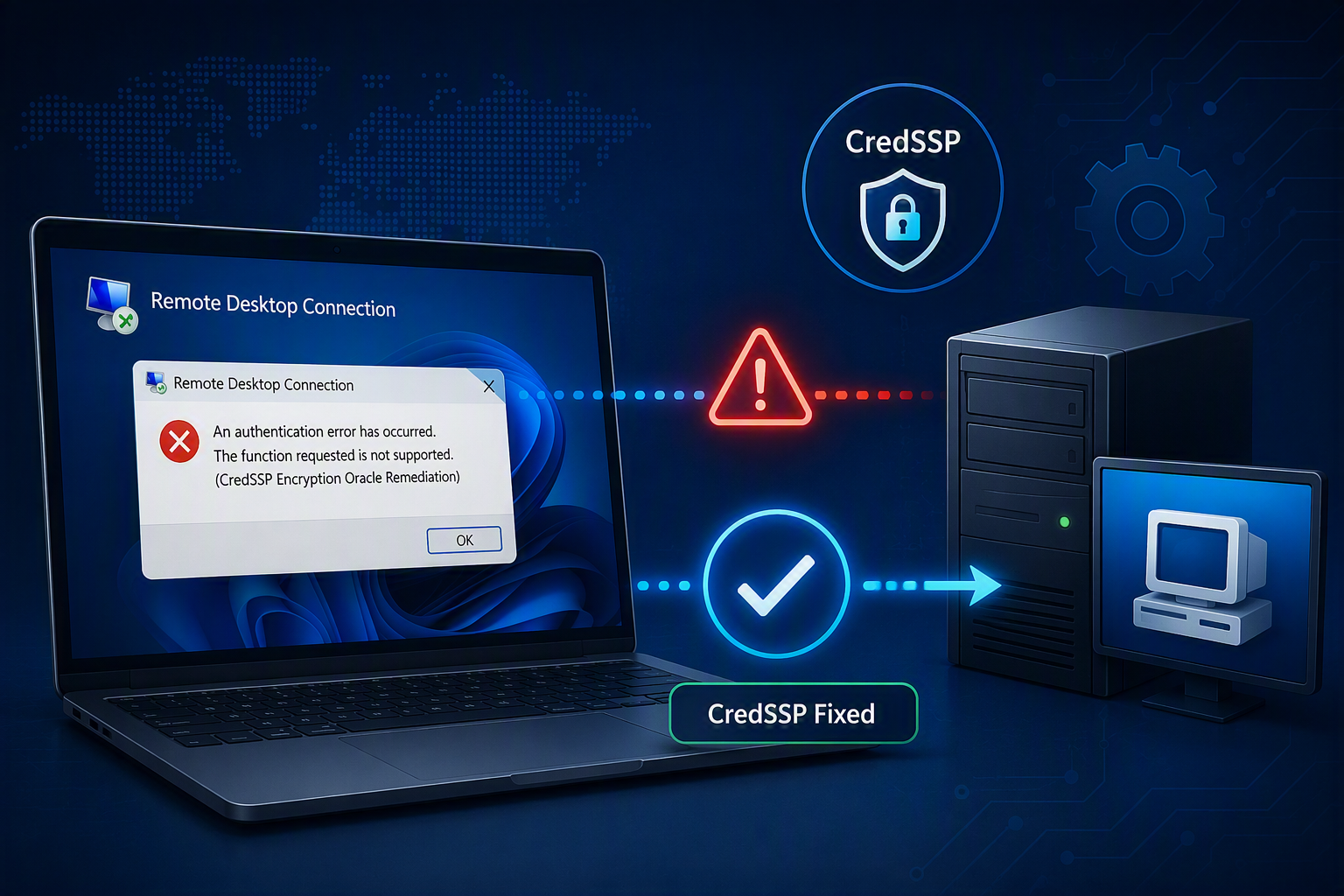
    Typical Error Message

    When attempting to connect through Remote Desktop, you may see an error similar to:

    An authentication error has occurred.

    The function requested is not supported.

    This could be due to CredSSP encryption oracle remediation.

    Why This Happens

    Microsoft tightened the validation process used during RDP authentication to mitigate a security vulnerability. As a result:

    • Newer Windows clients may refuse connections to older servers.
    • Legacy servers that have not received the required security updates can trigger the CredSSP error.
    • The issue is commonly encountered in environments with end-of-life operating systems or servers that are no longer regularly patched.

    Temporary Workaround

    ⚠️ Security Warning: The following workaround reduces the security level of the local computer and should only be used when connecting to trusted legacy systems. Where possible, update the target server instead.

    Open an elevated Command Prompt (Run as Administrator) and execute:

    REG ADD "HKLM\SOFTWARE\Microsoft\Windows\CurrentVersion\Policies\System\CredSSP\Parameters" /v AllowEncryptionOracle /t REG_DWORD /d 2 /f

    This configures the client to allow connections to servers that do not support the latest CredSSP security requirements.

    Apply the Change

    After executing the registry command:

    1. Close any active Remote Desktop sessions.
    2. Restart the Remote Desktop client.
    3. Attempt the RDP connection again.

    In some cases, a system reboot may be required before the change takes effect.

    Reverting the Change

    Once the server has been patched or upgraded, it is recommended to remove this workaround.

    To delete the registry value:

    REG DELETE "HKLM\SOFTWARE\Microsoft\Windows\CurrentVersion\Policies\System\CredSSP\Parameters" /v AllowEncryptionOracle /f

    Alternatively, set the policy back to its secure default configuration through Group Policy or system updates.

    Long-Term Recommendation

    This registry modification should be considered a temporary compatibility fix rather than a permanent solution.

    The best practice is to:

    • Patch the target server with the latest security updates.
    • Migrate unsupported operating systems.
    • Maintain consistent patching levels across servers and workstations.
    • Avoid reducing client-side security settings whenever possible.

    Conclusion

    The CredSSP error is typically caused by a security mismatch between modern Windows clients and older servers. While setting AllowEncryptionOracle to 2 can restore connectivity, administrators should view this as a short-term workaround and prioritize updating legacy systems to maintain a secure environment.